National Thematic Review of Adoption Services
This national thematic review draws on findings from inspections of all five Regional Adoption Collaboratives, alongside direct engagement with children, adoptive parents, birth families, and professionals.
1. Foreword
Adoption services in Wales are delivered by a committed and skilled workforce, supported by leaders and partners who are determined to improve the lives of children who can no longer live with their birth families. This national thematic review draws on findings from inspections of all five Regional Adoption Collaboratives (RACs), alongside direct engagement with children, adoptive parents, birth families, and professionals. Their experiences and insight provide a robust and compelling evidence base for the findings set out in this report. While the wider National Adoption Service (NAS) framework provides important context, the NAS Central Team and Voluntary Adoption Agencies (VAAs) were not within the scope of this review.
Across Wales, child-centred and trauma-informed practice are notable strengths. Practitioners consistently demonstrate a strong understanding of children’s lived experiences, identity and emotional needs, and work hard to support children through complex and significant transitions. A collaborative ethos underpins much of this work and, where it is well led and effectively governed, it results in thoughtful, responsive services for children and families, even in the context of significant capacity and resource pressures.
However, inspections of the five RACs highlight concerning variability in children’s experiences including differences between regions and within some regions. Where governance and partnership arrangements are strong, children benefit from timely decision-making, effective communication and coherent support pathways. Where these arrangements are weaker, children experience delay, inconsistency and uncertainty. Children's experiences continue to vary across Wales due to differences in permanence planning, adoption support and the application of national guidance.
These issues are further compounded by the ongoing national shortage of adopters. This is despite continued and focused recruitment and marketing activity across regions. This issue contributes to extended waiting times for all children, but particularly sibling groups and children with additional needs.
The commitment, resilience and professionalism of the workforce is evident. Practitioners and leaders demonstrate determination and creativity in responding to challenge, and there are strong examples of reflective leadership and effective partnership working. These strengths provide a solid foundation for improvement, but they cannot compensate for variable governance, data and oversight arrangements, which in some regions limit consistent coordination and assurance.
Sustained improvement now requires decisive and collective action. Progress will depend on strengthened governance, improved data and performance management, clearer accountability, and the consistent implementation of national frameworks and good practice. The success of RACs is contingent on robust support, challenge and coordination through wider National Adoption Service (NAS) structures.
We thank all children, birth and adoptive families, practitioners and partners who contributed to the inspections. Their openness has enabled us to present a comprehensive national picture of adoption services in Wales. As a national thematic review, this report focuses on the themes emerging across all five Regional Adoption Collaboratives. Individual inspection reports provide detailed findings about specific services, while this review identifies the common strengths, challenges and opportunities affecting adoption services across Wales. Examples are included to illustrate national themes rather than compare regions. Our focus is on reducing variation in children's experiences and supporting improvement across the adoption system. Sustained progress will help ensure that all children experience timely, safe and enduring permanence through adoption, regardless of where they live in Wales.
Gillian Baranski
Chief Inspector
Care Inspectorate Wales
2. At a glance
2.1 Overview
- Care Inspectorate Wales (CIW) inspected all five RACs between April and December 2025.
- Cross-regional thematic analysis examined adoption practice, support services, governance, safeguarding, workforce capacity, recruitment, quality assurance and performance management across Wales.
- View the individual RAC inspection reports on the CIW website.
2.2 National strengths
- Skilled, stable and committed workforce providing trauma-informed, child-centred practice.
- Visible and supportive leadership fostering learning cultures and clear communication.
- Strong emphasis on children’s identity, lived experience and emotional needs.
- Clear commitment to promote equality, diversity and cultural identity.
- Robust adoption panel arrangements offering multidisciplinary scrutiny and timely, child-focused recommendations.
- Rights-based practice and sensitive, informed engagement with birth families.
2.3 Key areas for improvement
- Shortage of adopters limiting opportunities for children to achieve permanence without delay, despite targeted recruitment campaigns.
- Inconsistent and delayed adoption support, including the provision of therapeutic services.
- Variability in the timeliness and quality of life journey work and later life letters.
- Governance inconsistencies, with some outdated partnership agreements.
- Safeguarding oversight is not consistently recorded or monitored in some regions, including the recording/monitoring of unannounced visits.
- Fragmented data systems limiting information sharing and consistent oversight.
3. Background
Adoption services in Wales operate within a national, three-tiered system established to ensure children who cannot live with their birth families are supported to achieve permanence through stable, long-term adoptive arrangements in a timely and consistent way. NAS brings together the five RACs, all 22 local authorities, health and education partners, VAAs and a national central team to provide leadership, coordination and oversight across the system.
There are positive examples of RACs collaborating with local authorities, health boards, education partners and VAAs. These partnerships are responsible for ensuring adoption arrangements are safe, align with statutory requirements and support the delivery of high-quality outcomes for children and families across Wales.
The statutory foundation for this collaboration is set out in the Adoption and Children Act 2002 (Joint Adoption Arrangements) (Wales) Directions 2015, which requires local authorities to work jointly to provide consistent, high-quality adoption services.
Care Inspectorate Wales (CIW) inspects local authority social services across Wales on behalf of Welsh Ministers under Section 149B of the Social Services and Well-being (Wales) Act 2014, ensuring local authority functions in relation to adoption are effectively discharged.
This national thematic review was undertaken in the context of a changing adoption landscape. Across Wales, adoption services face challenges in securing sufficient adopters, particularly for sibling groups and children with additional or complex needs. The review took place alongside ongoing efforts to strengthen adoption services through NAS and wider developments across adoption, fostering and kinship care. It considers how effectively arrangements support positive outcomes for children and families.
This review sits within wider Welsh Government ambitions to improve outcomes for care experienced children and aligns with the principles of the Well-being of Future Generations (Wales) Act 2015, including collaboration, prevention and improving long-term outcomes.
This review examined how national expectations and guidance are implemented at regional and local levels, identifying variability in children's experiences. We also identified what further action is required to ensure equity of experience and outcome for children across Wales.
This thematic review provides a national view of what is working well, where improvements are required, and how the adoption system must continue to mature.
4. Findings: Well-being
4.1 We asked
- Are services accessible, safe and responsive from first enquiry through to placement and beyond?
- Are children's well-being needs appropriately safeguarded as they move towards permanence and adoption?
- Do arrangements support children’s identity, culture and language, including Welsh medium provision where needed?
4.2 What we found
4.2.1 Accessible information and first contact
Services demonstrate a strong commitment to accessible, responsive engagement at the earliest stages of the adoption journey, recognising the importance of accessible information and timely first contact in supporting children’s and families’ well-being.
Information about adoption is generally well promoted across Wales through NAS and RAC websites, which provide accessible information about the adoption process. People considering adoption consistently described these websites as an important and helpful first point of contact. In some regions, interactive tools such as adoption ‘checkers’ support people to explore their circumstances and make informed decisions about next steps.
While NAS and RAC websites are widely used and valued, there are opportunities to strengthen digital communication. This includes making more consistent use of social media and other online platforms to promote adoption and share timely information with prospective adopters.
Across Wales, RACs respond promptly to initial enquiries. Information packs are consistently issued within five working days, and often sooner, in line with NAS good practice guidance.
This reflects a strong customer care ethos and recognition that early engagement is critical where there are national challenges in recruiting sufficient adopters.
Equally evident is a consistent strength in rights-based, child-centred practice, with practitioners ensuring that children’s and birth families’ views meaningfully inform decision-making.
Practitioners promote children’s rights and seek to ensure their voices are heard, advocating for children and involving them in decisions where appropriate.
Birth families receive sensitive engagement, accessible information and guidance that helps them understand what is happening and why.
Good practice: High quality digital resources
A RAC developed a suite of modern, engaging online materials to support prospective adopters at the earliest stages of their journey.
These included adopter story videos featuring real experiences from adoptive families and interactive decision-making tools designed to help individuals and couples explore whether adoption was right for them.
The resources support early understanding of the adoption process, reduce anxiety among prospective adopters, and challenge common misconceptions that might otherwise deter suitable applicants from coming forward.
Good practice: Birth parent engagement and responsive adoption support
A birth parent reflected positively on their experience of working with social workers throughout the adoption process, noting that information was explained to them gradually and at a pace they could manage. This approach left them feeling informed and respected at every stage.
Alongside clear communication, the birth parent received consistent practical support, including help navigating benefits and advocacy during meetings. This hands-on assistance strengthened their confidence and helped them engage more fully with the process.
This experience illustrates how thoughtful, person-centred practice, where support is tailored to the individual’s needs rather than delivered in a one-size-fits-all way, can make a meaningful difference to birth parents during what is often an extremely difficult time.
4.2.2 Gaps in information and service guidance
However, despite these strengths, there are notable gaps in the information available about local adoption support pathways. People considering adoption do not consistently receive accessible information about the range, availability and thresholds for adoption support in their area, either through websites or early engagement and marketing.
This limits understanding of what support is available to promote children’s and families’ well-being and can affect confidence in the system.
Key documents such as Statements of Purpose and adoption service guides for birth parents and children are intended to support clarity and understanding of services and people’s rights. However, across RACs these documents do not consistently contain all required information and are not routinely kept up to date. As a result, people do not always have a consistent understanding of what they can expect from services.
4.2.3 Safeguarding and children’s emotional well-being
Across Wales, adoption practitioners demonstrate a strong commitment to safeguarding and promoting children’s well-being. In the majority of RACs, trauma-informed and child-centred practice is well embedded with practitioners showing sensitivity to children’s histories, identity and emotional needs.
Safeguarding is routinely discussed in supervision and multi-agency forums and practitioners act promptly on concerns, working constructively with partner agencies.
However, safeguarding oversight is not consistently robust across all regions. In some areas, required unannounced visits to children prior to Adoption Orders are not always evidenced. Recording arrangements also vary, with safeguarding information often held within local authority systems rather than RAC systems. This fragmentation limits RACs’ ability to analyse safeguarding themes, monitor outcomes and assure themselves that concerns are being followed up effectively.
Good practice: Effective oversight of a child’s placement before an Adoption Order
Following a child being placed with an adoptive family, a RAC social worker proactively re-contacted the adoptive parent’s referee before the Adoption Order was granted.
This allowed the social worker to gather the referee’s independent perspective on how the placement was progressing and to assess whether it was meeting the child’s needs. This approach demonstrated good practice by ensuring that oversight of the placement drew on a range of views at a critical stage in the adoption process, rather than just those of the adoptive parent.
4.2.4 Welsh Early Permanence
Welsh Early Permanence (WEP) is an increasingly important valued care planning option supporting children to experience stability and a secure base as early as possible. By reducing the number of moves children experience, WEP helps minimise additional trauma and supports children’s emotional well-being as they progress towards permanence.
A national framework is in place and there is growing commitment across regions, with RACs learning from each other as practice evolves. However, WEP is not yet fully embedded across Wales. The number of children benefiting from this approach remains low and practitioners’ direct experience and confidence in using WEP varies between regions.
This is illustrated in Graph 1 below.
Graph 1: Number of children placed under the Welsh Early Permanence Framework from 1 April 2024 to 31 March 2025
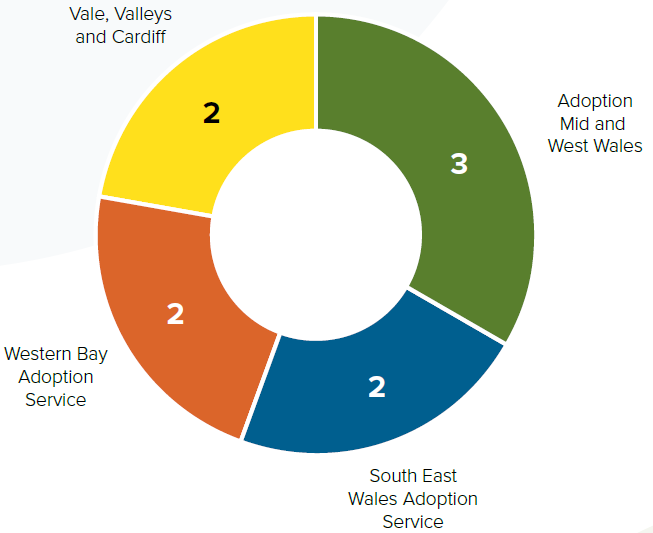
During 2024-2025, a total of nine children were placed under the Welsh Early Permanence Framework. Adoption Mid and West Wales recorded the highest number of placements (three). South East Wales Adoption Service, Western Bay Adoption Service, and Vale, Valleys and Cardiff each recorded two placements. North Wales Adoption Service recorded no placements under the Welsh Early Permanence Framework during 2024-25 and is therefore not shown in the chart.
Awareness, uptake and embedding of WEP varies between regions, despite training being available. More consistent engagement, recording and application would strengthen practitioners’ confidence and capability in using WEP.
4.2.5 Identity, culture and Welsh language
Promotion of equality, diversity and inclusion is a strength across adoption services, with proactive attention given to meeting children’s cultural, linguistic and religious needs. Services recognise the importance of placing children with families who can promote their heritage and language.
Children's cultural and identity needs are carefully considered. Where possible, children grow up in families who share and promote their heritage. Where this is not possible, adoptive parents are supported to help children maintain connections with their culture, language, religion and identity.
The availability of Welsh speaking practitioners varies between regions, largely reflecting local demographics. Where required, regions ensure that the adoption process can be delivered through the medium of Welsh.
This is sometimes supported through the use of third-party interpreters to ensure children, families and adopters are able to engage fully and meaningfully with services.
There are strong examples of practitioners skilfully promoting children’s rights and ensuring their voices are heard, taking steps to ensure children’s views meaningfully inform decisions. Birth families receive sensitive engagement, clear information and guidance that supports transparency.
Good practice: Consideration of birth parents’ views for the adoption of their child
When planning for a child's adoptive family, social workers carefully considered the wishes expressed by the birth parents, who hoped their child would grow up in a Muslim family.
The child went on to grow up with adoptive parents who could nurture their cultural and religious identity, helping them maintain a connection to their faith and heritage.
This example demonstrates how careful consideration of birth parents' views can support children's sense of identity and belonging.
5. Findings: Care and support
5.1 We asked
Do children, birth and adoptive families achieve good outcomes through the provision of support which promotes their overall well-being?
5.2 What we found
5.2.1 Assessments
Assessment processes for potential adopters are robust and comprehensive, with all required statutory checks completed. Practitioners are skilled in undertaking high quality assessments and use the national assessment framework consistently to guide their work.
Practitioners demonstrate a strong understanding of children’s histories, experience and vulnerabilities. This enables them to assess whether prospective adopters have the capacity, resilience and insight needed to meet children’s needs both now and in the future. As a result, children grow up with adoptive families who can provide safe, nurturing and stable homes. This approach supports placement stability, reduces the risk of breakdown, and promotes children’s long term well‑being, safety, and positive outcomes.
5.2.2 Quality and timeliness of permanence planning and transitions
Practitioners demonstrate a strong commitment to ensuring transitions from foster care to adoption are carefully planned, sensitive and focused on children’s emotional well-being. There are positive examples of effective joint working between RAC practitioners and children’s social workers, supporting children to move to their permanent families with minimal disruption. Practice is informed by national guidance and includes the use of trauma-informed nurture timelines (TNT) which identify key relationships, early experiences, their potential impact on children, and strategies to support emotional regulation. However, these approaches are not consistently embedded. For example, TNTs are only completed for children over two years of age and for a limited number of children overall.
Other helpful processes, such as ‘bump in’ days and ‘understanding the child’ days, provide adopters with valuable insight into children’s histories and needs. These approaches represent significant progress in adoption services, and support adopters to build understanding and readiness prior to placement.
Practice insight
“With the advent of our Understanding the Child team and access to our therapists, a far more detailed understanding of children’s needs has developed over recent years.” (RAC practitioner)
“I cannot fault my whole journey with both my social workers. They did exactly what they said they would and timescales they advised were spot on. I was very well supported throughout the whole process.” (Voice of an adoptive parent)
There is, however, variability in how quickly and effectively children are supported to move towards permanence and transition to their adoptive families. Delays in progressing children to their adoptive placement is illustrated in Graph 2 which shows the average number of days (arithmetic mean) taken for children to move from the decision that they should be placed for adoption to being placed. The data covers the period from 1 April 2024 to 31 March 2025. Although these timescales should be considered alongside relevant standards and regulatory expectations, the data highlights inconsistency in how promptly children progress through this stage.
Graph 2: Average number of days (arithmetic mean) taken for children to move from the decision that they should be placed for adoption to being placed
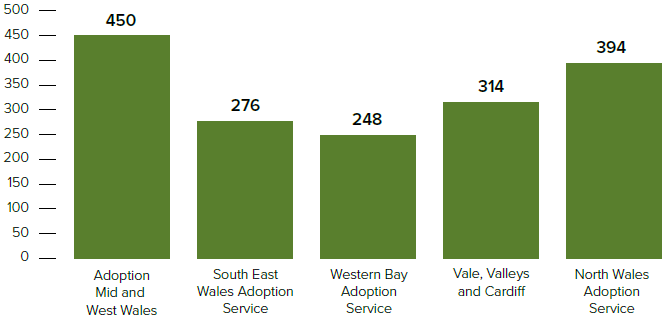
During 2024-2025, the average number of days taken for children to move from the decision that they should be placed for adoption to being placed varied considerably across Wales. Adoption Mid and West Wales recorded the longest average timescale at 450 days, while Western Bay Adoption Service recorded the shortest average timescale at 248 days. North Wales Adoption Service recorded an average of 394 days, Vale, Valleys and Cardiff 314 days, and South East Wales Adoption Service 276 days.
“We had our initial match in June 2021 and our son was not placed with us until November 2021. The process was very slow…” (Voice of an adoptive parent)
Children benefit from transition arrangements that reflect their individual needs and circumstances and avoid unnecessary delay.
5.2.3 Adoption support
There is variability in the availability,consistency, and quality of adoption support across RACs. Where support is effective, families benefit from coordinated and timely input, including therapeutic services, peer support, and increasingly innovative approaches such as life journey work and intermediary services.
This support helps children move successfully to their forever home.
Good practice: Communication with birth parents
Following placement with adoptive parents under a placement order, birth parents received settling-in letters within six weeks. These were written in a sensitive tone and clearly explained their rights and the implications of adoption.
The letters were carefully crafted to acknowledge the significance of the moment and ensure birth parents felt informed and respected, even as the process moved forward. This demonstrates how thoughtful, timely communication can provide meaningful reassurance at an emotionally challenging time.
Voices on adoption support
“My son had a challenging transition to us… we were referred to an amazing play therapist… she has kept our family together.” (Adoptive parent)
“The support we have received has been outstanding, including being advocated for and ensuring my children receive neuro diversity (ND) assessments and that the correct support for them is followed up and implemented.” (Adoptive parents)
However, this level of provision is not consistent across all RACs. In a minority of areas, children, adopters and birth families benefit from comprehensive, multidisciplinary adoption support that is accessible, timely and tailored to individual need. All but one RAC had a waiting list for adoption support services, and effective arrangements for reviewing and prioritising demand were not consistently evident across Wales. People on waiting lists were not routinely contacted to update them on the status of their wait or to assess whether their circumstances had changed.
Voices on adoption support: challenges
“After 18 months I’m still waiting for therapy support for my three children.” (Adoptive parent)
“We were not remotely supported on any aspect as soon as the children had been placed. Our experience was appalling. There are no events that occur near us and no support groups to meet our needs.” (Adoptive parent)
Voices of practitioners
“Our waiting list continues to grow.” (RAC practitioner)
“Working in rural Wales impacts how able we are to provide services.” (RAC practitioner)
5.2.4 Adoption support plans
The quality of Adoption Support Plans is variable, and they are not always reviewed or updated in a timely way to reflect the children’s and families' changing needs.
There is evidence of sensitive work across Wales that supports adopters to understand the benefits of different forms of contact for children. There are positive examples of practitioners promoting a modern approach to contact in line with the NAS Good Practice Guide for Contact1, exploring options beyond traditional letterbox arrangements and helping adoptive families understand the value of maintaining safe, appropriate connections. However, in most RACs, indirect contact (letterbox) remains a default for children and birth families. There is limited evidence of regular review or adaptation in response to children’s changing needs. This is not in line with the NAS Good Practice Guide for Contact.
5.2.5 Monitoring care and support plans
There are examples of Independent Reviewing Officers (IROs) having good oversight of children’s placements prior to Adoption Orders being made. This includes oversight of required unannounced visits to children following placement and before Adoption Orders are granted.
Best practice is where children benefit from continuity and oversight through a consistent IRO who maintains oversight of progress. In some RACs IROs monitor progress on the development of the child’s life journey work and later life letters. They hold a mid-point placement review, which provides a structured opportunity to scrutinise appropriateness and timeliness of life journey work following post-placement reviews.
5.2.6 Life journey work
There are examples of excellent life journey work undertaken with children, as well as later life letters written sensitively to support adopted children and adopted parents to understand the child’s past experiences. This enables adopters to support children to understand their history at a pace that’s right for them. However, the quality and timeliness of life journey work and later life letters is inconsistent meaning not all children benefit equally from this important support.
Voices on life journey work
“Life books are not updated in a timely manner as the child gets older.” (Adoptive parent)
“(RACs)… were able to help support us and give us information that was missing from our child’s paperwork.” (Adoptive parent)
Good practice: A child's life story
A child’s life story work was enriched through the thoughtful use of photographs, including good quality images of birth family members and those from the foster care household. These visual records helped the child to make sense of their experiences, understand their journey, and develop a stronger sense of their own identity.
Alongside photographs, the child benefited from stories written directly to them in the first person. This personal approach made the material more accessible and meaningful, helping the child to feel that their story was being told with care and with them at the centre.
This example highlights how investing in high quality visual and written materials as part of life story work can have a lasting positive impact on a child’s understanding of who they are and where they have come from.
5.2.7 Placement disruption
Despite pressures on adoption services, disruptions remain uncommon. Of the 196 Adoption Orders granted across Wales during the reporting period, only nine placements ended before an Adoption Order was made.
This is illustrated in Graph 3 below.
Graph 3: Number of children between 1 April 2024 and 31 March 2025 whose Placement for Adoption permanently disrupts between date of Placement for Adoption and before Adoption Order
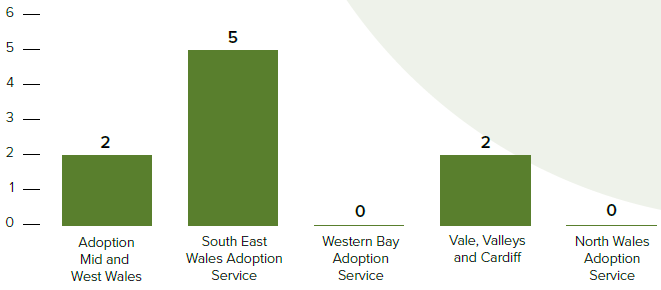
Between 1 April 2024 and 31 March 2025, South East Wales Adoption Service recorded the highest number of children whose placement for adoption permanently disrupted between placement for adoption and the adoption order, with five disruptions. Adoption Mid and West Wales and Vale, Valleys and Cardiff each recorded two disruptions. Western Bay Adoption Service and North Wales Adoption Service recorded no placement disruptions during the period.
There are excellent examples of RACs analysing and learning from placement disruptions and using learning from these cases to identify and respond to emerging themes. The consistently low level of placement disruption provides evidence of strong placement stability overall.
However, assessment activity is becoming increasingly complex and is further affected by limited and delayed access to essential medical or specialist information. This can hinder robust, evidence-based decision-making and contributes to delays in the approval of prospective adopters.
This is illustrated in Graph 4 below.
Graph 4: Average (arithmetic mean) length of time in days it takes for a prospective adopter to progress from initial enquiry to agency decision to approve as suitable to adopt in given period (1 April 2024 to 31 March 2025)
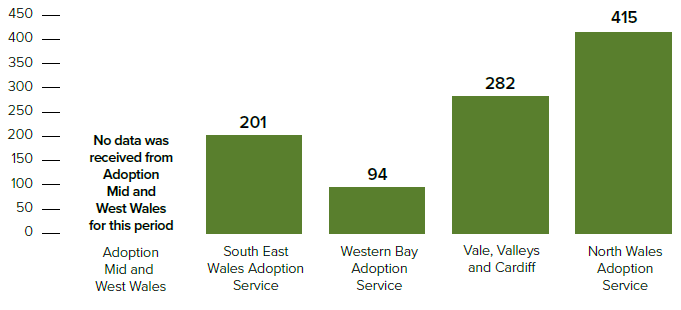
During 2024-2025, the average number of days taken for prospective adopters to progress from initial enquiry to agency decision varied across Wales. North Wales Adoption Service recorded the longest average timescale at 415 days. Vale, Valleys and Cardiff recorded an average of 282 days, South East Wales Adoption Service 201 days, and Western Bay Adoption Service the shortest average timescale at 94 days. No data was received from Adoption Mid and West Wales for this period.
5.2.8 Child’s voice
In the strongest examples, Children’s Adoption Reports A and B (CAR A and CAR B) clearly and effectively reflect the voices, perspectives, lived experiences and rights of children and their birth families. There are examples of high quality reports for children who are looked after that are written in the first person, improving accessibility for children who may later read their records in adulthood.
However, practice remains inconsistent across Wales.
Too many CAR B reports continue to state that children are “too young” to have a voice, limiting meaningful representation of their experiences. In contrast, stronger reports demonstrate that a child’s perspective can be conveyed regardless of age, for example through carefully constructed narrative statements reflecting what the child might say, or through practitioners’ informed observations.
High quality reports consistently demonstrate how children’s early experiences may affect them throughout
their lives and how these factors should inform plans for their future care and permanence.
Good practice: Personalised storybooks and creative communication tools
Children were supported to make sense of their experiences through the use of personalised storybooks and creative communication tools tailored to their individual circumstances. These resources helped to promote emotional safety and played an important role in supporting identity formation, giving children an accessible and age-appropriate way to understand their own history.
The benefits extended beyond the children themselves. Adoptive parents found that having these materials available gave them the confidence to talk openly and sensitively with their child about their background, both at the point of placement and as the child grew older and their questions became more complex.
The approach demonstrates how well-designed, personalised resources can support not just the child, but the whole adoptive family, in navigating conversations about identity and history in a way that is thoughtful and child-centred.
5.2.9 Child-centred, trauma-informed practice
Across Wales, adoption practitioners demonstrate a strong commitment to child-centred and trauma-informed practice, recognising the importance of understanding each child’s history, identity and emotional needs. Practice is grounded in approaches that promote emotional safety, trust and meaningful involvement, supporting children to make sense of their experiences.
Practitioners consistently draw on a range of creative communication tools to help children understand their life stories and develop a secure sense of identity. These approaches are particularly effective in enabling children to engage at a pace and in a way that reflects their age, development and emotional readiness.
Training for prospective adopters is generally described as open, reflective and honest. It supports adopters to develop a strong understanding of trauma and attachment and equips them to respond to children’s experiences with confidence, empathy and sensitivity.
However, the quality and consistency of trauma-informed practice varies across regions, indicating further opportunities to strengthen and embed this approach more consistently across Wales.
5.2.10 Adoption panels
Adoption panels across Wales provide robust, child-focused scrutiny, supported by appropriate multi‑agency challenge and a wide range of professional expertise, including adoption, fostering, health and education. Panel arrangements are well structured and support timely, accountable recommendations to Agency Decision Makers (ADMs). ADMs consistently make timely and well-reasoned decisions, strengthening governance, although written records do not always fully reflect the depth of decision-making. In several regions, panels actively consider the child’s voice, demonstrating good child-centred practice. Adopters are well supported through medical advice about their own health and children's needs, and value the guidance provided to help them understand and meet the needs of the children who join their family.
5.2.11 Recruitment of adopters
Recruitment of sufficient adopters is a significant national concern. Despite targeted campaigns and all RACs having a focus on this area, the number of adopters available has declined substantially since 2021/22. While the number of placements needed has remained relatively stable, demand began to exceed the number of available adopters in 2023/24 and the shortfall increased further in 2024/25. There remains a persistent shortage of adopters, particularly for sibling groups and children with complex needs, impacting children's ability to achieve permanence without unnecessary delay. Marketing strategies do not consistently reference the support available to people considering adoption. Greater clarity about the support available before and after adoption may help encourage more applications.
Graph 5 illustrates the sustained decline in the number of adopters available since 2021/22 and shows how placements needed exceeded available adopters from 2023/24 onwards, creating an increasing shortfall.
Graph 5: Placements needed compared with adopters available – graph shared by National Adoption Service
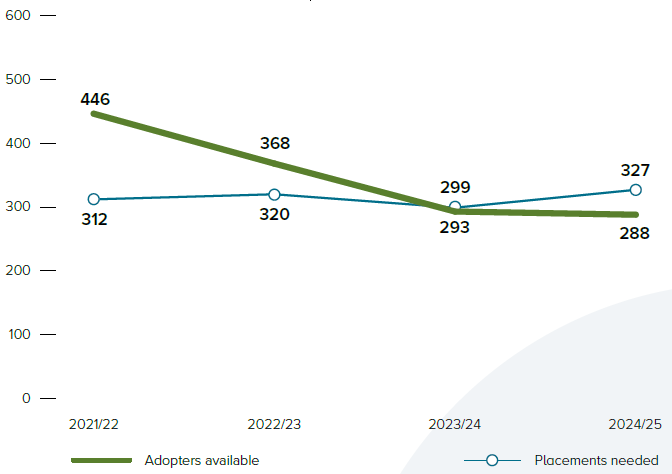
Data provided by the National Adoption Service shows that the number of adopters available decreased from 446 in 2021-22 to 288 in 2024-25. Over the same period, the number of placements needed remained relatively stable, ranging from 293 to 327. In 2021-22 and 2022-23 there were more adopters available than placements needed. In 2023-24 the figures were broadly equal, with 299 adopters available and 293 placements needed. In 2024-25, the number of placements needed (327) exceeded the number of adopters available (288).
6. Findings: Leadership and governance
6.1 We asked
Do leadership and governance arrangements ensure the provision of high-quality services for people?
6.2 What we found
6.2.1 Leadership and culture
Leaders across Regional Adoption Collaboratives (RACs) are visible, approachable and supportive, creating
an environment where practitioners feel valued and well guided. Leaders promote an open, learning culture and encourage reflective, trauma-informed practice.They engage positively with practitioners and promote learning and reflective opportunities such as appreciative inquiry exercises and specialist workshops.
However, there is variability in the strength and consistency of leadership and governance across Wales. In regions where a dedicated Regional Adoption Manager (RAM) role is in place, practitioners reported strengthened oversight, clearer communication and greater consistency in day-to-day decision-making.
6.2.2 Regional Management Board
Each RAC is supported by a Regional Management Board (RMB). Where membership is stable, appropriately senior and consistently engaged, with representation from key stakeholders, RMBs provide effective strategic oversight, support coherent planning, align resources and enable timely decision-making. In the strongest
examples, Regional Partnership Boards also have robust oversight of adoption services and proactively identify how partners can support delivery. Delegated budgetary authority for RAM further strengthens timely decision-making and more consistent planning for children and families.
However, in some areas, partnership agreements are outdated, key partners are not routinely engaged, and governance arrangements lack sufficient oversight. This weakens scrutiny of practice and service development, limiting the effectiveness and consistency of strategic leadership across the region.
6.2.3 RACs and local authority children’s services workforce
Practitioners across RACs and local authority children’s services involved in adoption work are skilled, experienced and committed, contributing to a strong child-centred culture supported by regular supervision and ongoing professional development. They demonstrate a strong understanding of safeguarding responsibilities, ensuring children’s needs remain central to assessment and decision-making. Stable staffing within RACs supports continuity, enabling trusting relationships with children, adopters and partner agencies, strengthening planning and contributing to sustained placement stability and improved outcomes.
However, there are examples where limited workforce capacity, often linked to short-term funding of key posts, can directly affect the timeliness and quality of the service provided and can also affect practitioner morale.
Practitioners and leaders within RACs are not always employed by the same employer. This results in different employment terms and conditions for practitioners across local authorities. This can create operational and cultural complexities.
High turnover of children’s social workers in local authorities can disrupt children’s adoption journeys, leading to delays and requiring families to repeat their experiences. However, despite this, positive and well established working relationships are generally maintained between RAC practitioners and children’s social workers.
Workforce pressures: voices from practitioners
“Workload issues… are overwhelming staff.”
“Caseloads are too high.”
“We remain short staffed… my workload has increased significantly.”
6.2.4 Statement of Purpose and guides
RACs Statements of Purpose and information guides for prospective adopters, birth parents and children play an important role in supporting their understanding of the adoption process. However, across Wales they do not consistently include all required information. Some are out of date, limiting their effectiveness in supporting clarity, accountability and people’s rights. Improving the consistency, accuracy and completeness of these documents would strengthen people’s understanding of the service and their rights.
6.2.5 Quality assurance
There is variation in how RACs monitor practice, use learning to drive improvement and quality assure service delivery. While RACs have a range of mechanisms that contribute to service review, these are not consistently aligned or embedded across the whole service. A more systematic and consistent approach to auditing, monitoring, reviewing and embedding learning is required across Wales. This should also include a focus on how well practice aligns with NAS good practice guidance and the recommendations made following
Child Practice Reviews/Single Unified Safeguarding Reviews.
There are examples where the views and experiences of children and families are routinely gathered and analysed to inform practice and service development, including shaping marketing approaches and contributing to annual reviews. However, this approach is not applied consistently, limiting its impact. RACs also need to strengthen how engagement with stakeholders informs service delivery and ensure feedback is clearly communicated back to those who have contributed, demonstrating the difference it has made.
Most RACs do not routinely collate or analyse information about safeguarding referrals and outcomes, viewing this as the responsibility of local authority children’s services. To maintain effective oversight and demonstrate compliance with the Wales Safeguarding Procedures, RACs need to consistently record all safeguarding concerns, monitor responses within required timescales and ensure safeguarding information informs adoption support planning. Strengthening these arrangements would also enable better use of safeguarding data at both strategic and operational levels.
6.2.6 Data systems
In some RACs, limitations in data systems and restricted access to local authority children’s services records hinder timely communication and information sharing. Practitioners highlighted the practical impact of these issues.
“We do not have access to any of the systems of the local authorities we work for… we have to rely on very busy local authority social workers to keep us updated.” (Voice of a practitioner)
Fragmented and poorly aligned systems hinder effective partnership working, delay information sharing, and impact the timeliness and accuracy of decision-making.
While local authorities across Wales are implementing new case recording systems and have considered integration with RACs as part of this work, the absence of a single system and the use of different platforms within some regions means these challenges are likely to persist in parts of Wales.
6.2.7 Co-ordinated learning across Wales
The central team provides national coordination, develops guidance and tools and supports themed subgroups focused on recruitment, performance and adoption support. This contribution is valued and helps promote consistency and reduce duplication across RACs. Some RACs work proactively with other regions to share learning and develop best practice, however, this is not yet consistent across Wales. Stronger cross-regional collaboration would reduce variation and support more consistent implementation of NAS guidance.
Defined expectations about how the three tiers of NAS work together to coordinate improvement activity would further strengthen national alignment.
7. Next steps
7.1 Individual regional follow up
Care Inspectorate Wales will follow up with each RAC individually to discuss progress made against actions arising from their own inspection reports.
7.2 Engagement
CIW is committed to supporting the sector to engage with the findings of this report. We will work with partners across the adoption system in Wales to consider how the evidence and learning can best inform practice, strategy and governance going forward.
7.3 Ongoing assurance
This report identifies national themes and priorities for improvement across Wales. The individual RAC inspection reports provide the detailed findings, areas for improvement and recommendations relevant to each service. Progress against these service-specific requirements will be monitored through CIW's ongoing inspection and assurance activity, alongside consideration of national progress in addressing the themes identified in this report.
Appendix 1: Glossary of terms
This glossary provides definitions of key terms used throughout the report. It is intended to support clarity, consistency and shared understanding across regional and national adoption services in Wales.
Active Offer
A principle of Welsh language provision that ensures services are available in Welsh without people having to ask. It supports language, culture and identity throughout the adoption journey.
Agency Decision Maker (ADM)
The senior officer within the adoption agency who makes the final decision about whether a child should be placed for adoption and whether prospective adopters are suitable to adopt, taking into account the recommendations of the adoption panel and all relevant reports.
Adoption Orders
A legal order granting full parental responsibility to approved adopters and permanently severing the legal ties
between a child and their birth parents. The adoptive parent(s) become the child’s legal parent(s) for life, including after the child reaches 18.
Adoption Panel
A multi agency body that provides independent oversight of adoption work. It considers and makes recommendations on key decisions, including the approval of prospective adopters and the suitability of children to be placed for adoption. The panel brings together experienced professionals and independent members
to ensure decisions are well informed, child-centred, and based on full and accurate information. Its role is advisory, with final decisions made by the agency decision maker (ADM).
Adoption support
The range of services provided before and after an Adoption Order to adopted children, adoptive families and birth families. This may include advice,therapeutic interventions, training, peer support, contact arrangements, life journey work and intermediary services.
Adoption support plans
Plans that set out the assessed adoption support needs of a child and their family, the services to be provided, and arrangements for review. These are child-centred, proportionate and updated to reflect changing needs.
Advocacy
Support enabling children, young people, birth families and adopters to have their voices heard and rights upheld. Advocacy helps individuals understand options, express their wishes and participate meaningfully in decisions. Types include:
- Self advocacy• Informal advocacy
- Independent Professional Advocacy (IPA).
Birth family guide
A document that provides birth parents and relatives with information about the adoption process, their rights, what to expect, and the support available to them. It explains:
- the legal meaning of adoption
- associated timescales
- how decisions are made
- how they can contribute to their child’s plan
- arrangements for post adoption contact and
- how to access advocacy and support services.
CAR A (Child’s Adoption Report A)
The statutory report for adoption panel when considering whether adoption is the most appropriate permanence plan. It provides a comprehensive account of the child’s background, experiences, identity, needs and the reasons adoption is being proposed.
CAR B (Child’s Adoption Report B)
The statutory report completed when a proposed match is being considered. It sets out detailed information about the child’s needs, the prospective adopters’ capacity to meet those needs and how the match will support the child’s welfare
and long-term well-being.
Care and support
Support provided by a RAC when arranging adoption.
Child
A person aged under 18.
Children's social workers
Local authority practitioners responsible for looked after children, including those with a plan for adoption. They work with RACs to progress care planning, matching, transitions and life journey work.
Children’s guide
A child friendly document explaining what the adoption service does, what children can expect and who will support them.
Foster carer
A person approved under relevant regulations to care for a looked after child on behalf of a local authority.
Intermediary services
Services that support adopted adults and birth relatives to access information or regulated contact arrangements.
Independent reviewing officers
Qualified and experienced social workers with a statutory role to independently review and monitor the care and support plans of children who are looked after, including children placed for adoption prior to an Adoption Order being granted. They chair review meetings, ensure children’s wishes and feelings are heard, and provide independent challenge where local authorities are not meeting their duties or plans are not progressing in the child’s best interests.
Later life letters
Age appropriate letters written by the child’s social worker explaining early life experiences, key decisions and reasons for adoption, forming part of NAS Life Journey Work.
Life journey work
Work comprising the Life Story Book and Later Life Letter, providing a coherent, age appropriate account of the child’s history, identity and experiences.
Matching
The process of identifying the most suitable adoptive family for a child based on their needs, identity and experiences, and the adopters’ capacity to meet those needs now and in the future.
More Than Words
The Welsh Government framework for meeting the Welsh language needs of children, families and practitioners. In adoption services it promotes the Active Offer and ensures language, culture and identity are considered in assessment, matching and support.
National Adoption Service (NAS)
A Wales wide, three tier adoption service bringing together a national central team, five RACs, local authorities and Voluntary Adoption Agencies to deliver and improve adoption services across Wales. For more information, visit National Adoption
Service website.
Placement Order
A court order authorising a local authority to place a child for adoption with approved adopters. It remains in force until an Adoption Order is made, it is revoked, or the child reaches 18.
Practitioners
Professionals who work directly with children, birth families and adoptive families to assess, support and progress adoption arrangements.
Regional Adoption Collaborative
(RAC)
A partnership of local authorities established to deliver adoption services on a regional basis as part of the National Adoption Service for Wales. RACs undertake adoption agency functions, including the recruitment and assessment of adopters, family finding, matching, and the provision of adoption support services, with the aim of securing timely permanence and improving outcomes for children.
Regional adoption manager (RAM)
Leads the operational and strategic functions of a RAC, supporting quality assurance, workforce oversight, partnership working and the consistent application of national guidance.
Regional management board (RMB)
Provides strategic oversight and governance of a RAC, scrutinising performance, ensuring effective partnership working and supporting continuous improvement.
Self evaluations
Information gathered by CIW during inspection and performance evaluation to understand the experiences, views and perspectives of people who use, work in or alongside a service.
Single Unified Safeguarding Reviews
A national Welsh framework providing a single coherent safeguarding review when serious harm or death occurs and abuse or neglect is suspected.
Statements of Purpose
Legally required documents outlining the aims, objectives and operations of an adoption service. They must be accurate, accessible and regularly reviewed.
NAS Central Team
The national NAS function providing leadership, coordination, guidance and performance oversight to support consistent adoption practice across Wales.
Trauma-informed/Trauma nurture timelines
A NAS endorsed tool presenting a trauma informed chronology of a child’s experiences and nurturing responses. Used to inform matching, transition planning and adoption support.
Transitions
The planned, structured process supporting a child’s move from foster care to their adoptive family, including introductions and changeovers tailored to their age, emotional needs and lived experiences.
Voluntary Adoption Agency (VAA)
An independent, regulated adoption agency that recruits, assesses and supports adopters and works with local authorities and RACs to secure adoptive families for children.
Welsh Early Permanence
A NAS framework supporting early stability by placing children with carers approved as both foster carers and prospective adopters whenever possible.
Appendix 2: Methodology
Approach overview
This national thematic review draws on a substantial body of evidence gathered from across the five RACs in Wales. Neither the National Adoption Service (NAS) Central Team nor Voluntary Adoption Agencies were inspected as part of this methodology. The methodology was designed to provide a comprehensive understanding of how adoption services are delivered, experienced and overseen, with a particular focus on consistency, quality, and the lived experiences of children and families.
Fieldwork (interviews, records, panels)
Fieldwork was undertaken during individual inspections of each RAC. Visits took place between April and December 2025 and included:
- Inspection report: Mid and West Wales Regional Adoption Collaborative
- Inspection report: South East Wales Adoption Service
- Inspection report: Western Bay Adoption Service
- Inspection report: North Wales Adoption Service
- Inspection report: Vale, Valleys and Cardiff Adoption Service.
During fieldwork inspectors reviewed case records, observed practice, and engaged directly with children, young people, birth and adoptive families, practitioners, managers and partners.
CIW compiled and distributed a self-evaluation for each RAC to complete ahead of inspection activity. Self-evaluations provide insight into regional strengths, areas for improvement and the effectiveness of local systems. Self-evaluations helped shape lines of enquiry and provided essential context for inspection activity.
Inspectors also reviewed documentation submitted by RACs ahead of the visits. Throughout the fieldwork, interviews and focus groups were held with a wide range of professionals, including RAC practitioners, local authority children’s services teams, health and education partners, third sector representatives, elected members and adoption panel members. Observations were undertaken of adoption panels and support groups.
A detailed review of social care records was undertaken, which included reviewing 83 adoption records and tracking 21. Tracking activity sometimes involved meeting with children, adoptive parents, birth parents and foster carers where appropriate. Inspectors also spoke with adults and children with direct experience of adoption, including adopted adults, adopted children, birth parents, adopters and foster carers.
Surveys were distributed to practitioners and managers across RACs and local authorities, as well as adopters, birth families and other relevant stakeholders, such as VAAs, health and education partners. Additionally, consideration was given to how well NAS policy and good practice guidance are applied in practice.
This multi layered approach enabled triangulation of evidence from practice observation, documentary review, survey data and direct testimony from people who use or deliver adoption services. Through this methodology, we gained a rich and balanced picture of adoption practice across Wales and identified the thematic findings, strengths and areas for improvement outlined in this report.
Limitations
The approach used to gather evidence for the RAC inspections is detailed in the appendices.
Records viewed are focused predominantly on the period 1 April 2024 to 31 March 2025.
VAAs were not specifically inspected as part of this methodology. However, the inspections did consider children and families experiences when children had been placed with adoptive families through VAAs.
Intercountry adoption represents a relatively small proportion of adoption activity in Wales and was therefore not a primary focus of this review.
Welsh language
CIW is committed to providing an active offer of the Welsh language and the active offer was accepted on occasions during the inspections of RACs. We carried out interviews through the medium of Welsh.