Pili Pala Childminding
Supporting progress through observation-led practice
Background
Pili Pala Childminding is a home-based childcare setting run by Abigail Davies, who has been registered with Care Inspectorate Wales since January 2023.
She cares for a small number of children, which means she can take a highly personalised approach that supports each child’s stage of development.
What are they doing differently?
Abigail uses detailed observations linked to the Welsh Government Early Childhood Play, Learning and Care (ECPLC) developmental pathways to track each child’s development and identify their next steps.
She shares these observations and next steps regularly with parents, helping them understand how their child is developing and how they can support this at home. This strengthens consistency between home and the setting.
She also uses these observations to plan activities that are tailored, purposeful and responsive to children’s interests and stages of development.
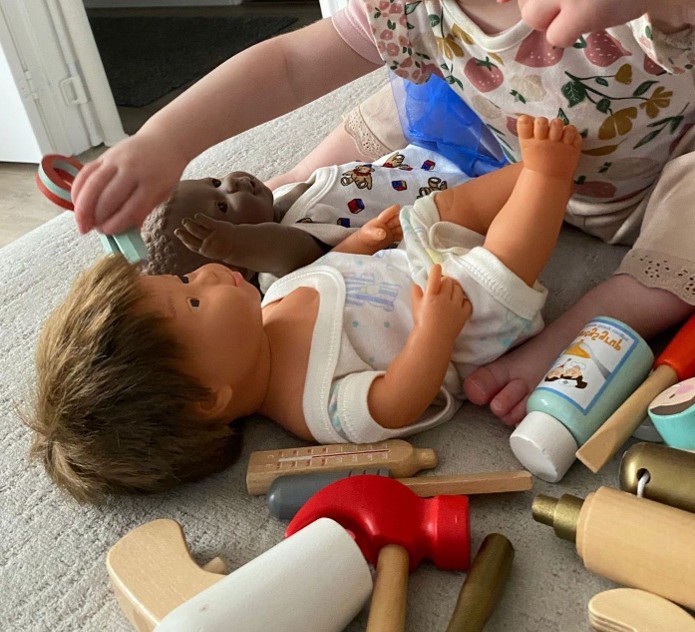
For example, when observations identified a child engaging in nurturing play with dolls alongside repeated schematic behaviour (where children repeat actions to explore how things work) and emerging language, Abigail planned focused activities to support this. She introduced additional open-ended resources, including containers with lids and posting activities, to encourage further exploration.
Impact
- Children make steady developmental progress, with observation-led assessment helping to identify needs early and provide targeted support
- Children’s communication skills develop with increasing confidence, supported by activities matched to their stage of development
- Children's play becomes more sustained and purposeful, with children showing improved concentration, imagination and fine motor skills through tailored activities
- Parents have a clearer understanding of their child’s development and how to support learning at home
Quote
"Watching children grow in confidence, communication, and independence shows me how effective responsive, child-led practice can be”
Documents
-
Pili Pala Childminding practice worth sharing , file type: PDF, file size: 513 KBPDF, File size:513 KB